Moving to Portland? How to choose the right neighborhood
Moving to Portland? How to read a Portland address, what to check about your commute and errands, and how to spend time in a neighborhood before you buy there.
Jake Goodson · October 22, 2026
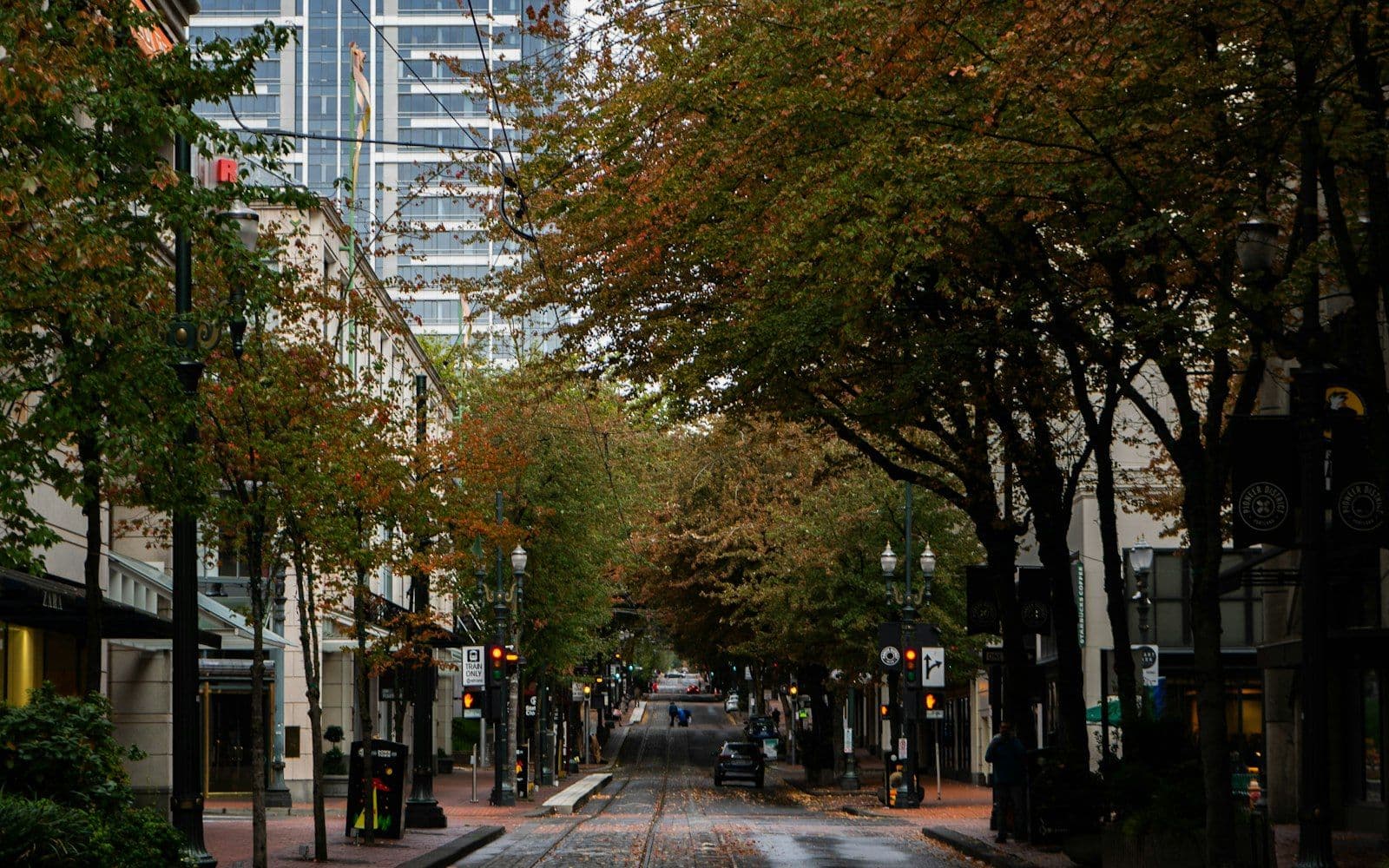
If you're moving to Portland from somewhere else, you're probably choosing a neighborhood from a list of names and a few photos. Every one of those neighborhoods looks great on a sunny Saturday. Most of your life there won't be Saturdays, though. It'll be a wet Tuesday in December, leaving for work before it's light out and coming home after it's dark again.
So choose a neighborhood for your regular weekdays: the commute, the errands, the walk after dark. Here's how we'd go about it.
How do you read a Portland address?
Learn this before you look at a single listing. Every Portland address starts with its sextant, the part of the city it's in, and there are six: North, Northeast, Northwest, Southeast, Southwest and South Portland, which became the sixth in 2020 (City of Portland).
Avenues run north and south, streets run east and west, and each block gets 100 numbers. On the east side, that means the house number usually tells you the nearest numbered avenue. A house in the 3900 block of a Southeast street sits right around SE 39th Avenue. Once you know that, a listing tells you more than its photos do.
What should a neighborhood give you on a regular weekday?
Start with where you have to be every day: work, school, the gym you swear you'll go to. Then figure out how you'll get there. Some neighborhoods are on light rail. The city's own neighborhood directory points out that the MAX Yellow Line runs through Arbor Lodge in North Portland (City of Portland). Other neighborhoods you'll drive out of every morning, and that's fine as long as you know it going in.
Then think about what's in walking distance. Coffee, groceries, a park for the dog. Not every Portland address gets you those on foot, and some don't come with sidewalks at all. The same directory describes Hayhurst, in Southwest, as having small homes on large lots and "winding streets without curbs or sidewalks." Plenty of people move here hoping for exactly that. If you walk a dog after dark or push a stroller, it's something you want to know before you buy, not after.
How much should the house itself matter?
A lot. Portland's close-in neighborhoods are full of older houses. Irvington was built out as a streetcar suburb between 1887 and 1930, and the city lists Queen Anne, Craftsman and Prairie School houses there. The city describes Sunnyside as Victorian and Craftsman homes, with the shops and restaurants of SE Hawthorne and Belmont right there.
We're big fans of these houses. The trim, the built-ins, rooms that were proportioned by someone who cared. They also come with a century of other people's decisions, and older systems behind the walls, so the inspection matters more than it does on a newer house.
In a Portland winter you spend a lot of time indoors, and the days are short. When you tour a house, notice where the light comes in and which rooms get it. A dark living room is easy to forgive in August. It's harder in January.
Should you look outside the city?
Maybe! We've teased Beaverton for years, and lately we've had to admit it has a lot of what people are looking for: easy living, food from all over, and a housing stock that makes sense. The 'Beav is peaking.
The trade with most suburbs is more driving and fewer things you can walk to. Weigh that against how your regular week goes, the same way you would anywhere else. We wrote more about that in Portland vs. the suburbs.
How do you try a neighborhood before you live there?
Go on a weekday. Get coffee on the main street at eight in the morning, walk the blocks around the house after dark, and drive the commute at the hour you'd be driving it. If you can, come back when it's raining. A street that's charming in July is the same street in January, and you should see both before you sign anything.
If you're coming from out of town and can only do one trip, plan it around those things instead of around showings. New listings come up every week. The feel of a neighborhood is something no listing can show you.
Where do we come in?
First step for you is to tell us how your week goes: where you work, what a weeknight looks like, and what you can't live without. We'll tell you where we'd start looking, and where we wouldn't.
Call us at 503.730.8677, email hello@houselabteam.com, or carrier pigeon us. We'll get back to you either way.
The Houselab Team @ LikeKind Realty
Related
Is Alameda or Irvington better for buying an older home in Portland?
Two Northeast Portland neighborhoods full of houses from the 1910s and 1920s, side by side. Here's the difference that matters once you own one, and what we'd check on each before you bid.
Is buying a house near the Springwater Corridor a good idea in Portland?
It depends on the block. Here's what we check first, starting with the flood map, and how a house near the trail compares with the inner Southeast blocks you may have started with.